How Do Cooling Vests Work?
Cooling vests lower body temperature by absorbing heat away from your torso — the body's thermal core. They do this through one of three mechanisms: evaporation, phase change, or active airflow. Each method pulls heat differently, and the right one depends on your environment and how long you need relief.
What Is a Phase Change Material (PCM) Cooling Vest?
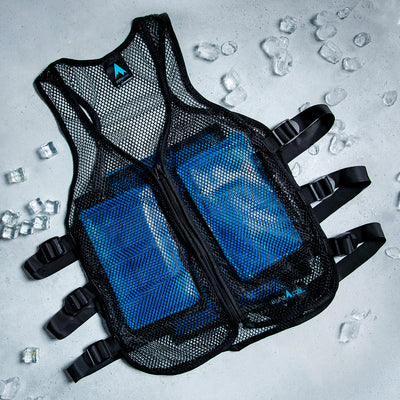
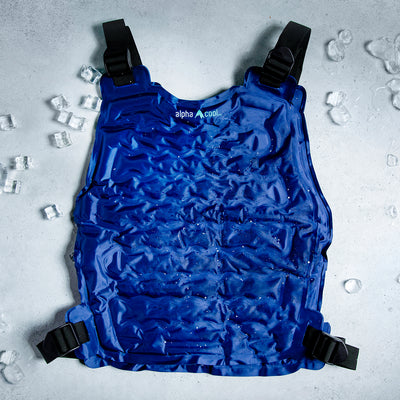
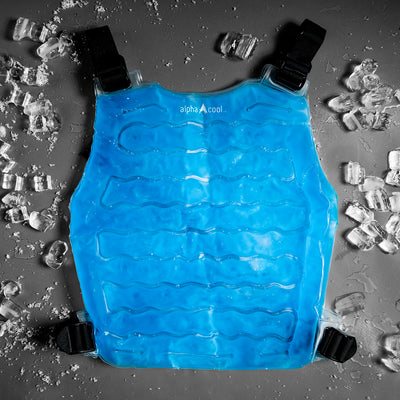
A phase change material cooling vest uses packs filled with a substance — typically a salt hydrate or paraffin wax — that melts at a fixed temperature, usually around 58–65°F (14–18°C). As it melts, it absorbs heat from your body at a steady, controlled rate. Unlike ice, PCM doesn't drop below its melt point, so you get consistent cooling without the painful cold bite. The packs recharge by soaking in cold water or placing in a freezer, and most last 2–4 hours per charge.
How Does Evaporative Cooling Work in a Vest?
Evaporative cooling vests are soaked in water and rely on evaporation to pull heat away from your body — the same principle as sweating. As water evaporates from the vest's polymer beads or fabric, it carries heat with it. These vests are lightweight and require no refrigeration, but their effectiveness drops sharply in humid conditions because humid air slows evaporation.
What Is a Battery Powered Cooling Vest?
A battery powered cooling vest uses small fans or thermoelectric modules to actively circulate cool air across your skin or back. A rechargeable cooling vest in this category typically runs 4–8 hours on a charge and adjusts by speed setting. Active vests work in any humidity level, making them one of the most versatile options — though they're heavier than passive vests and depend on having a charged battery.
Do Cooling Vests Really Work?
Yes — cooling vests genuinely reduce core body temperature and perceived heat stress. Clinical studies and occupational health research consistently show measurable drops in core temp and heart rate when vests are worn during heat exposure. How well they work depends entirely on matching the vest type to your conditions.
Are Cooling Vests Effective in High Humidity?
Evaporative vests lose most of their effectiveness above 70% relative humidity — evaporation stalls when the air is already saturated with moisture. In humid climates, phase change or battery-powered vests are the reliable choice. PCM vests work independently of humidity because they absorb heat through melting, not evaporation, so a humid Florida jobsite or a tropical race environment won't degrade their performance.
What Do Studies Say About Cooling Vest Performance?
Research published in occupational health and sports medicine journals shows pre-cooling with a PCM or ice cooling vest before exercise reduces cardiovascular strain, lowers perceived exertion, and extends time to exhaustion in heat. For medical users — particularly those with MS — trials show cooling vests reduce symptom flare-ups triggered by elevated body temperature. The evidence is strongest when the vest is worn before heat exposure begins, not after you're already overheated.
Can Cooling Vests Be Worn Under Clothing?
Slim PCM vests and some evaporative vests are specifically designed to be worn under a shirt, uniform, or hi-vis jacket. Look for low-profile designs without bulky external packs. Wearing a cooling vest under clothing actually improves performance in direct sun — the outer layer blocks radiant heat while the vest handles conductive cooling against your skin. Active fan-based vests are generally too bulky to wear concealed.
What Are the Different Types of Cooling Vests?
There are four main cooling vest types: evaporative, phase change (PCM), ice-based, and battery-powered active. Each has a distinct operating profile — different cooling duration, temperature range, recharge method, and ideal use case. Knowing the difference is the fastest way to avoid buying the wrong one.
Evaporative vs. Phase Change Cooling Vest: Which Is Better?
Neither is universally better — they serve different conditions. Evaporative vests win on weight, cost, and simplicity: soak for a few minutes, wear for hours, no freezer needed. PCM vests win on consistency, humidity resistance, and medical-grade reliability. Dry climate, limited budget: evaporative is a smart pick. Humid environment, heat-sensitive condition, or need for guaranteed performance: invest in a PCM vest.
What Is an Ice Cooling Vest?
An ice cooling vest uses pockets filled with crushed ice or ice packs to deliver aggressive, rapid cooling. These are the coldest option available and are popular for athletic pre-cooling protocols and emergency heat management. The trade-off is short duration — ice melts in 30–60 minutes depending on ambient temperature — and they're heavier when loaded. Ice vests suit high-intensity short bursts, like a 5K race or a 30-minute outdoor shift, rather than all-day wear.
How Long Does a Cooling Vest Last Before Needing a Recharge?
Duration varies significantly by type. Evaporative vests last 4–8 hours but need re-wetting. PCM vests deliver 2–4 hours of active cooling per charge, then need to be re-frozen or soaked in ice water. Ice cooling vests run 30–90 minutes. A rechargeable cooling vest with a battery-powered fan lasts 4–8 hours on a charge depending on speed setting. For all-day use, PCM vests with swappable packs or a backup set of inserts are the most practical solution.
Who Should Use a Cooling Vest?
Cooling vests are used across three broad groups: people with heat-sensitive medical conditions, outdoor and industrial workers, and athletes. Each group has different performance priorities — medical users need consistent, safe cooling; workers need durability and long duration; athletes need lightweight, unrestricted fit.
What Is the Best Cooling Vest for People with Multiple Sclerosis (MS)?
The best cooling vest for MS is a PCM vest with a melt point around 61–65°F (16–18°C), worn before and during heat exposure. MS symptoms — vision changes, fatigue, weakness — are triggered by even a 0.5°C rise in core temperature (Uhthoff's phenomenon). PCM vests deliver the steady, predictable cooling that prevents that spike. Look for medical-grade vests with cervical collar attachments or neck wraps that cool the carotid arteries for faster systemic effect. Lightweight, low-profile designs allow continuous wear without fatigue.
What Is the Best Cooling Vest for Outdoor Workers?
The best cooling vest for outdoor workers combines long duration, durability, and compatibility with PPE. PCM vests with swappable packs are the most practical — workers can swap a fresh set of inserts at lunch and get another 2–4 hours. Hi-vis compatible designs that fit under or over safety vests matter on construction sites. Evaporative vests work well in dry climates and are lighter for extended wear, but avoid them on humid sites where they'll stop working mid-shift.
What Is the Best Cooling Vest for Athletes and Runners?
Runners and endurance athletes benefit most from lightweight PCM or ice cooling vests used for pre-cooling — wearing the vest 15–20 minutes before the start line lowers core temp before exertion begins. During exercise, vests need to be low-profile, non-restrictive, and moisture-wicking so they don't interfere with stride or breathing. Vest weight matters: every extra pound is a liability over distance. For team sports with longer exposure windows, vests worn during warm-ups and half-time breaks deliver measurable performance benefits.
How Do I Choose the Right Cooling Vest for My Needs?
Choose a cooling vest by matching four variables: your environment's humidity, how long you need cooling, whether you need it for medical or performance reasons, and whether you can recharge on the go. Getting these four right narrows the field fast.
What Cooling Vest Is Best for Hot, Dry Conditions?
In low-humidity environments — desert climates, dry warehouses, arid regions — evaporative vests deliver strong performance at a lower price point. Dry air maximizes evaporation rate, so these vests cool aggressively and last longer between re-wettings. A quality evaporative vest is hard to beat for consistently dry settings where cost is a factor. Add a PCM option if you need guaranteed cooling during peak heat or in enclosed spaces without airflow.
What Size and Fit Should I Look for in a Cooling Vest?
A cooling vest needs to make full contact with your torso to transfer heat — a loose vest won't cool effectively. Look for adjustable side closures and a design that covers the upper back and chest without riding up. Women's-specific cuts matter more in cooling vests than in most gear because torso proportions affect pack placement and contact coverage. Wearing a vest under PPE or a uniform: size up one and confirm the profile is slim enough to fit without restricting movement.
Will a Cooling Vest Make My Clothes Wet?
It depends on the type. Evaporative vests are inherently moist and will dampen whatever they contact — outer clothing will show moisture, especially in low-humidity conditions where evaporation is aggressive. PCM vests produce minor condensation as packs absorb heat, similar to a cold drink sweating on a hot day. Most PCM vests use moisture-barrier covers to minimize this. Ice cooling vests can drip significantly as ice melts. Battery-powered vests produce no moisture at all — the driest option if keeping clothes dry matters.
How Do You Get the Most Out of a Cooling Vest?
Cooling vest performance comes down to timing, preparation, and matching the vest to your actual conditions. The biggest mistake is putting on a vest after you're already hot — most vest types perform best as a preventive tool, not a recovery one.
When Should You Put On a Cooling Vest?
Put on a cooling vest 10–20 minutes before heat exposure, not after you start sweating. Pre-cooling gives the vest time to lower your baseline core temperature before heat load increases. This is especially important for medical users and athletes. For workers starting a hot shift, wearing the vest during your commute or in a break room before heading outside compounds the benefit significantly.
How Do You Recharge a PCM Cooling Vest in the Field?
PCM pack recharge time varies by method. A freezer at -18°C fully recharges most packs in 45–90 minutes. Ice water at 0°C takes 20–30 minutes and is the fastest field option — a cooler of ice water is standard gear for workers on long outdoor shifts. Some salt-hydrate PCM formulations recharge at refrigerator temperatures (around 4°C), taking 2–3 hours. Keep a second set of inserts charged and ready if your workday or event exceeds the vest's single-charge duration.
How Do You Care for and Maintain a Cooling Vest?
Most vest shells are hand-washable or machine washable on a gentle cycle — always remove PCM packs or battery units first. Air dry the shell; dryer heat degrades PCM pack seals and elastic closures over time. PCM packs can be rinsed and dried between uses. Check seals on PCM packs periodically — a leaking pack loses its phase change capacity quickly. Store battery-powered vest batteries at 40–60% charge during extended periods of non-use to preserve cell lifespan.